✓Computed, not generated
Every number on your dashboard comes from a direct calculation over your synced data — not a model's best guess at what the answer might be.
Engineering Governance
DORA and Flow Metrics, calculated straight from what you already sync from Jira, Linear, GitHub and CI/CD — no LLM in the loop, no token bill at the end of the month.
Get started freeDeployment counts, lead time, cycle time — these are facts sitting in your Jira, GitHub and CI/CD data already. Running them through a language model adds cost and doubt where neither is needed.
Every number on your dashboard comes from a direct calculation over your synced data — not a model's best guess at what the answer might be.
One predictable subscription price. You never pay per report, per query, or per seat of AI usage — because there isn't any.
A deploy count is a deploy count. There's no inference step that can misremember, round creatively, or make something up.
Metrics render as fast as a database query — not as fast as an API round-trip to a language model.
None of this means AI is bad — it just isn't the right tool for "what's my deployment frequency this month." That's a query, not a guess.
| AI-based tool | moasy.tech | |
|---|---|---|
| Where the number comes from | ✕ Model inference | ✓ Direct calculation |
| Cost | ✕ Per token/query | ✓ Flat subscription |
| Reliability | ✕ Can hallucinate | ✓ Same input, same output |
| Speed | ✕ API round-trip to a model | ✓ As fast as a database query |
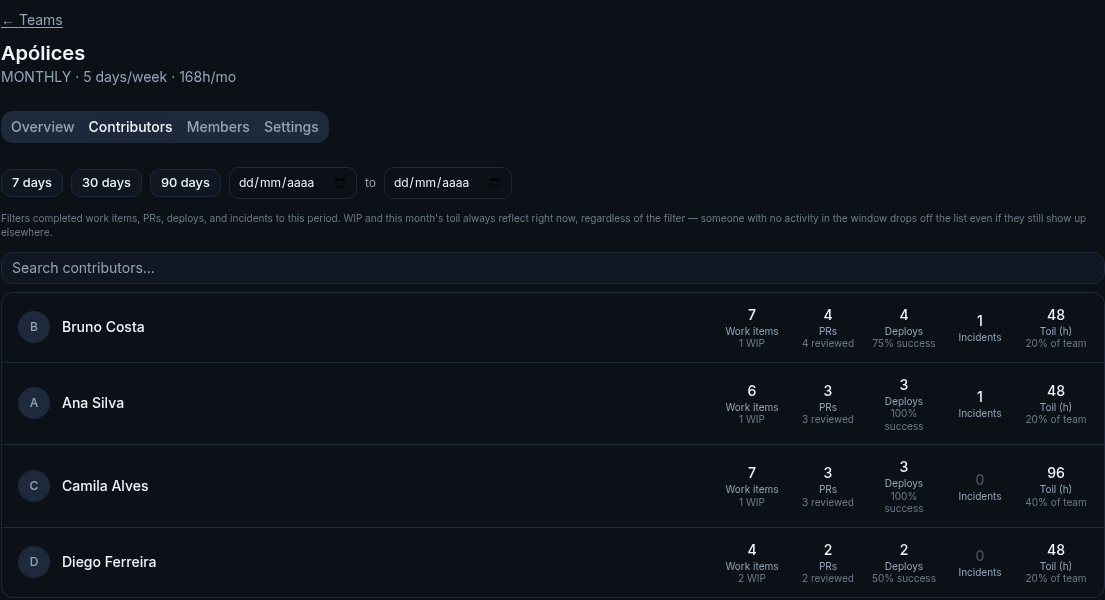
Three things that today, without this, live scattered across provider dashboards, spreadsheets and whoever happens to be paying close attention.
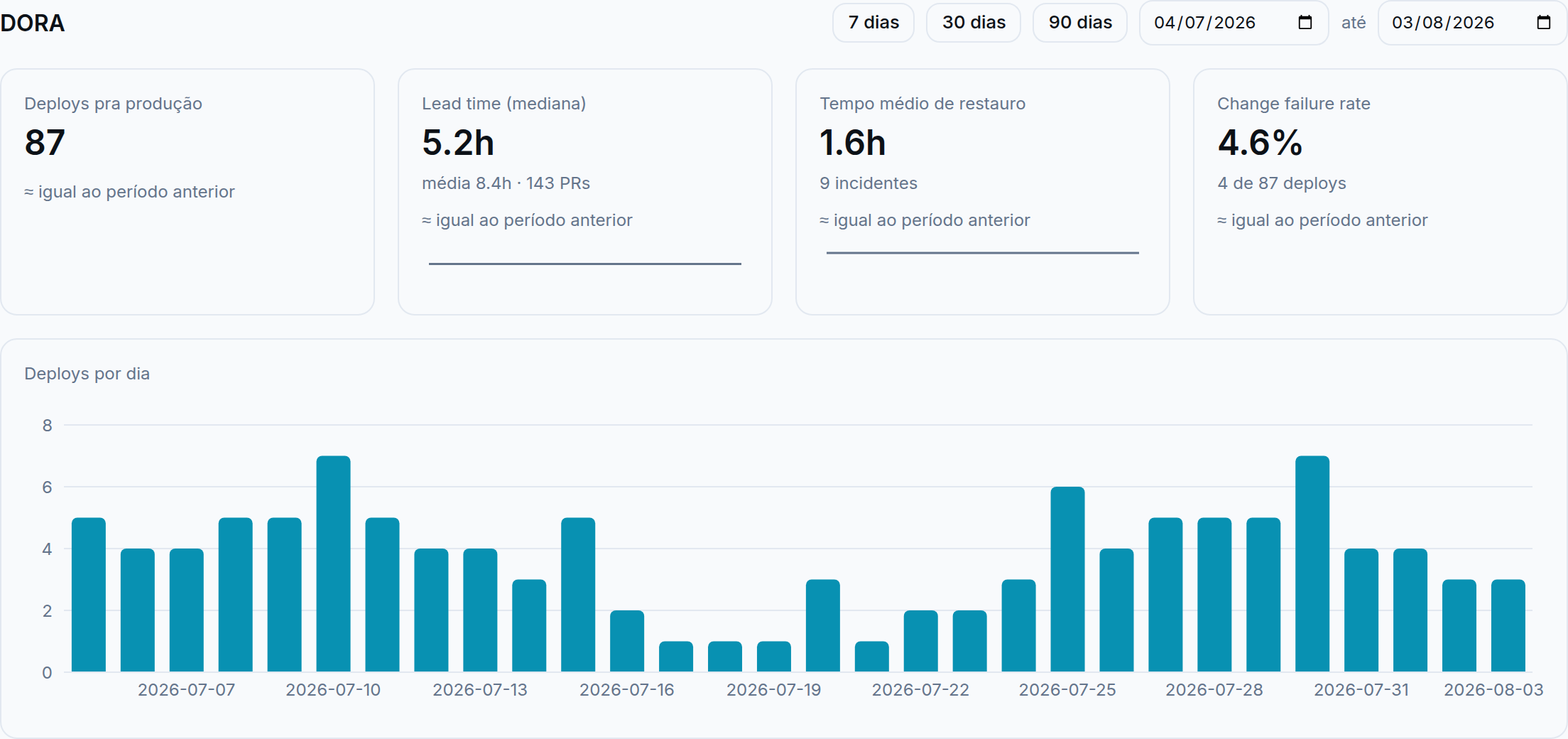
Deployment frequency, lead time for changes, mean time to restore and change failure rate — recalculated automatically from what's already synced from GitHub, GitHub Actions/ArgoCD and Waroom. What counts as an incident — and whether it counts as a failure — follows the same team-configurable rules described below, with a company-wide default as fallback. Filter by date range or by team, with a trend line next to every number.
Illustrative data, for demonstration purposes only.
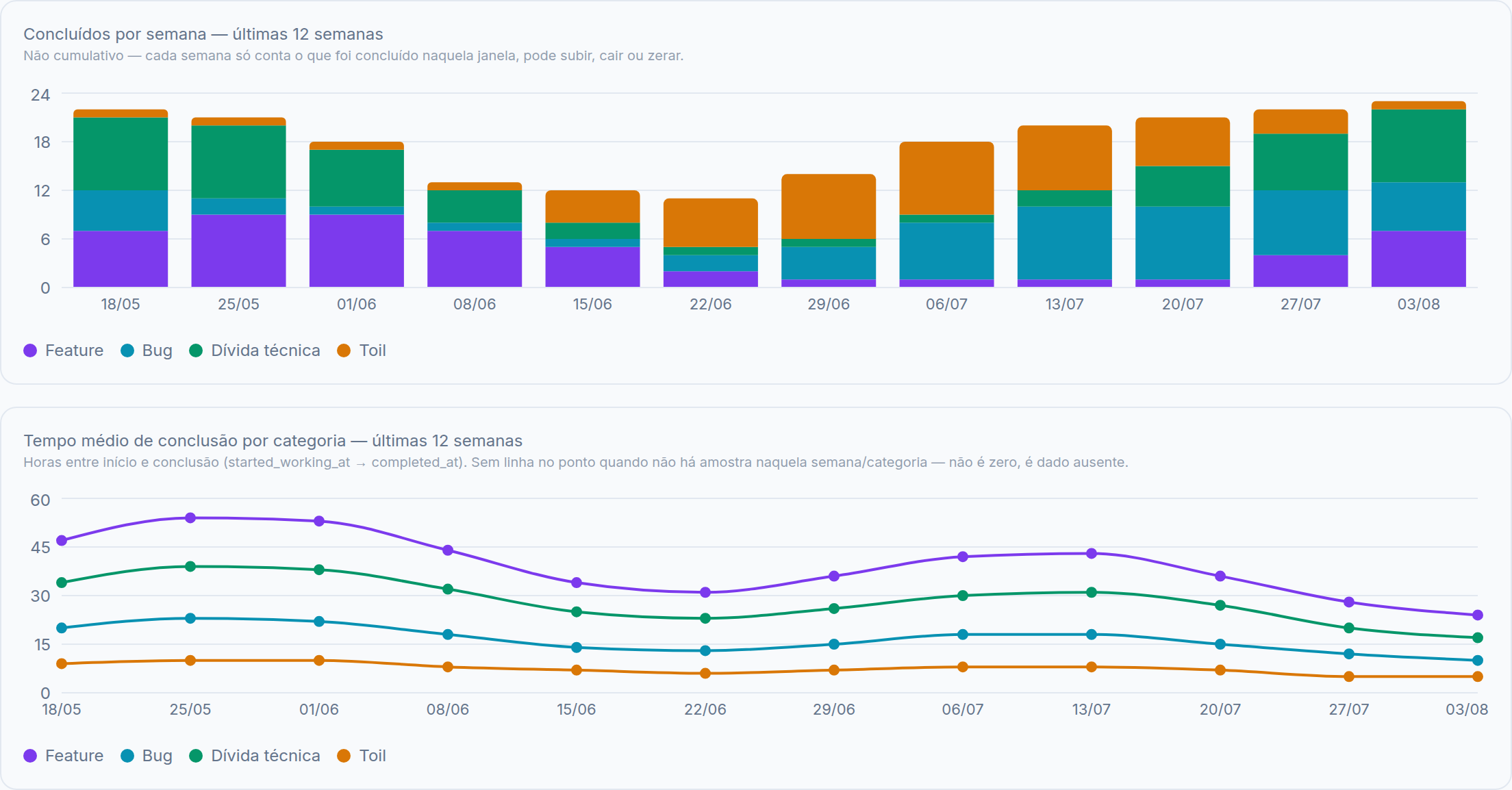
How much got done each week, and how long each category of work takes from start to finish — Bug, Feature, Technical Debt, Toil and Risk, classified by rules you configure yourself. Set a default at the company level, then let each team override it — what counts as Toil for one team can be a Feature for another, and the system adapts instead of forcing one definition on everyone. See the team improving (or not) week over week, not just a snapshot of today.
Illustrative data, for demonstration purposes only.
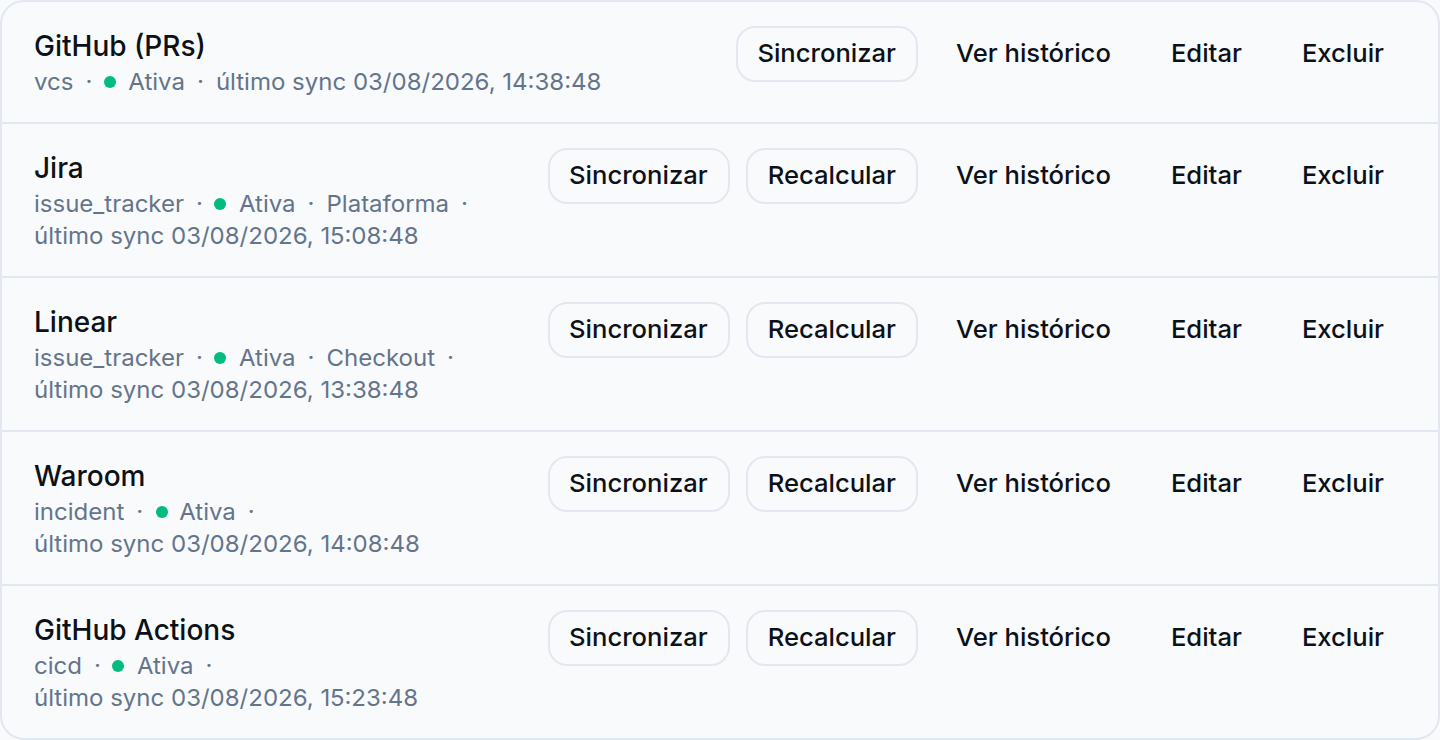
Nothing to migrate: every integration just reads what already exists in your tools. A single provider can have several integrations — two Jira boards, one per team, for example — and each one shows a run history, so you know exactly when it last synced.
Illustrative data, for demonstration purposes only.
No feature gating between plans yet — every plan gets full access to the platform until that segmentation exists.
USD 0/mo
Start now, no credit card required.
Get startedUSD 99.99/mo
30 days free, then USD 99.99/mo.
Get startedNo. Every integration is read-only — moasy.tech only reads what already exists in your tools. Sync runs incrementally, either triggered manually or once a day on its own.
Through semantic rules you configure yourself — not an automatic label lookup, and not AI. Rules can be set company-wide and overridden per team, since what counts as Toil or a failure can differ from one team to the next.
Yes. A single provider can have several integrations — two Jira boards, one per team, for example — each syncing and enriching independently.
No. The Free plan never touches billing — no card required to start.
No. Cancellation is scheduled, not immediate — you keep access until the end of the period you already paid for.
We validate every credential against the provider before saving it. A bad token fails clearly, on the spot — it never gets saved and silently breaks a sync later.
No. Every tenant's data is isolated — there's no cross-tenant visibility.